
Your CV is your first impression when applying for a healthcare job. Whether it’s for the NHS, private healthcare, or a care home, a strong CV increases your chances of landing an interview. However, many candidates make simple mistakes that weaken their applications. Here are the most common healthcare CV mistakes—and how to fix them.
1. Weak or Generic Personal Statement
Your statement must immediately tell the reader who you are and what you bring. Too many candidates produce bland or generic descriptions that don’t make a splash.
✅ Fix It:
• Make it short—3–4 sentences.
• Include your experience, most important skills, and what you’re seeking.
• Make it job-specific.
Example:
❌ “Dedicated healthcare professional looking for a new challenge.”
✅ “Experienced healthcare assistant with 3+ years of patient care. Experienced in medication administration and patient care, looking to enhance patient outcomes in a fast-paced NHS environment.”
2. Listing Duties Rather Than Achievements

Listing your job responsibilities does not demonstrate your worth. Employers want to see how you impacted.
✅ Fix It:
• Focus on achievements rather than duties.
• Use numbers and specific examples wherever possible.
Example:
❌ “Assisted patients with daily activities.”
✅ “Supported 15+ patients per day, enhancing patient satisfaction scores by 20%.”
3. Irrelevant or Obsolete Information
Recruiters don’t want to hear about your part-time retail job of 10 years ago. Excessive irrelevant information undermines your CV.
✅ Fix It:
• Focus on the last 5–10 years’ experience.
• List only healthcare-related jobs or transferable skills.
Example:
❌ “Worked in retail, dealing with stock and customer service.”
✅ “Provided patient care assistance in a hospital environment, handling medical records and supporting treatments.”
4. Poor Formatting and Layout
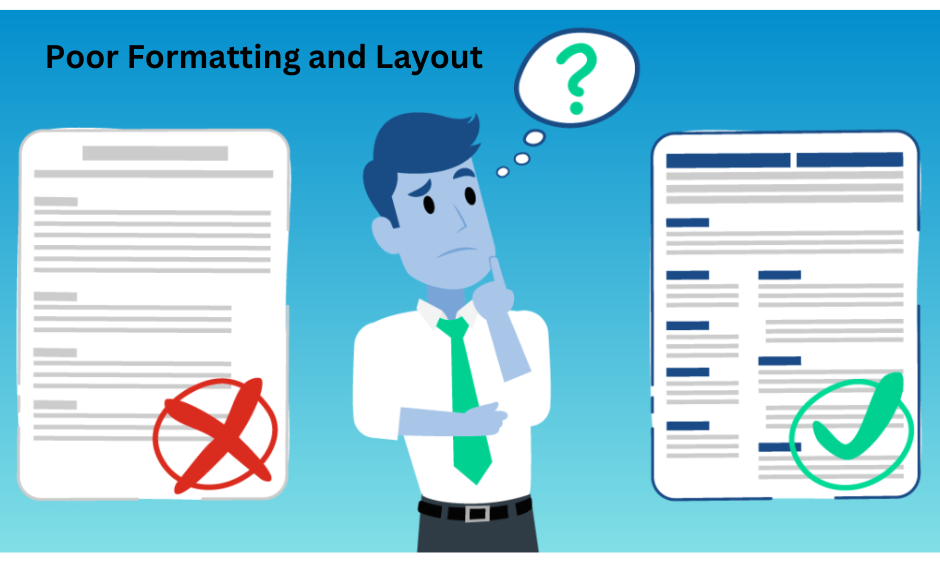
Cluttered or uneven formatting makes your CV difficult to read and can have it thrown away.
✅ Fix It:
• Use a clean, professional font (Arial or Calibri).
• Maintain consistent headings and utilize bullet points for readability.
• Keep it to two pages maximum and save it as a PDF.
Example:
❌ Multiple fonts and large areas of text.
✅ Well-organized layout with obvious sections and bullet points.
5. Absence of Keywords from the Job Description
Most healthcare employers utilize applicant tracking systems (ATS) to screen CVs. It will not be viewed if your CV does not contain the proper keywords.
✅ Fix It:
• Take keywords from the job description naturally into your CV.
• Highlight terms such as “patient care,” “clinical skills,” and “medication administration.”
Example:
❌ “Healthcare worker with experience in a medical setting.”
✅ “Experienced in patient care, medication administration, and clinical record-keeping.”
6. Unexplained Employment Gaps

Unexplained gaps in employment history can be a red flag.
✅ Fix It:
• Tell the truth and give a quick explanation.
• Demonstrate how you remained productive (e.g., training, volunteering).
Example:
❌ No explanation for a two-year gap.
✅ “Took time off to care for a family member. Took an online course in patient care while doing so.”
7. Spelling and Grammar Errors
Typos and bad grammar indicate sloppiness—a huge red flag in healthcare.
✅ Fix It:
• Take advantage of a spellchecker and grammar feature.
• Read it out loud to catch errors.
• Have someone proofread it.
Example:
❌ “Experince in healthcare settings.”
✅ “Experience in healthcare settings.”
8. Weak or Missing Professional Summary
The professional summary gives the hiring managers an instant sense of your value and experience.
✅ Fix It:
• Write 2-3 sentence descriptions of your skills and experience.
• Cross the specific and then ensure relevance to the healthcare context.
Example:
❌ “Currently seeking healthcare work.”
✅ “Registered healthcare assistant with over 4 years of experience working with patients in medication delivery and patient support.”
Last Word
A solid healthcare CV is concise, well-organized, and customized to the job. Emphasize your successes, speak clearly, and maintain a professional tone. Spending time getting it perfect may be the most important step to securing your next healthcare job.